The best hiking footwear is the pair that fits your feet, matches the terrain and stays comfortable after hours of movement. Brand reputation matters less than heel hold, toe room, traction and how the shoe behaves on the surfaces you actually hike.
Key points
- Fit comes before features
- Leave toe room for descents and swelling
- Match outsole and protection to terrain
- Waterproofing trades breathability for protection
- Test with the socks you actually hike in
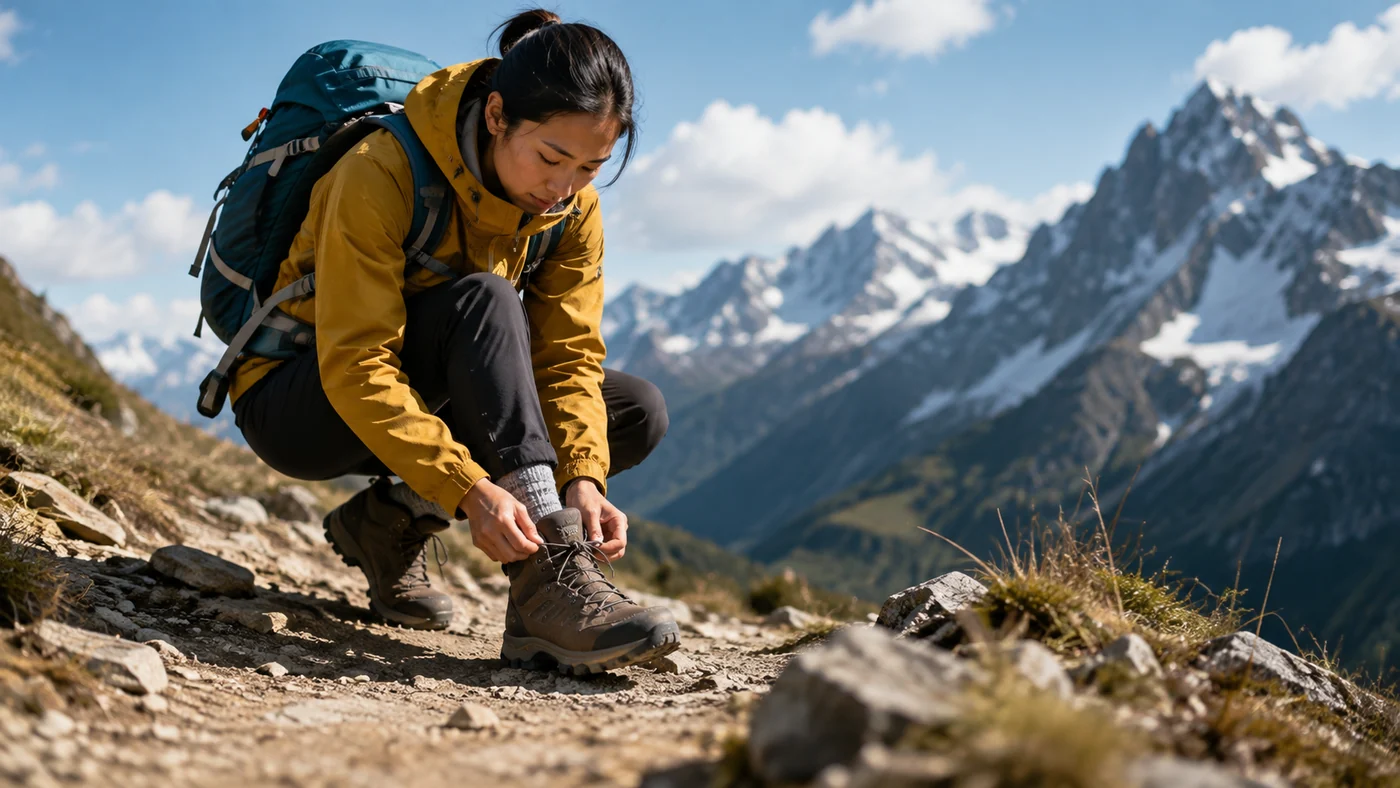
1. Start with fit at hiking volume
Feet often swell during long walks, so footwear that feels perfect first thing in the morning may become tight later. Try shoes later in the day with the socks you plan to wear.
Your heel should feel secure without painful pressure, and your toes should not hit the front when walking downhill. Width matters as much as length.
2. Choose protection for the terrain
Smooth park paths do not require the same underfoot protection as sharp rock, roots or scree. A stiffer sole and toe protection can reduce fatigue and impact on rough surfaces, while flexible shoes may feel better on easy trails.
More structure is not automatically better. Too much stiffness can feel tiring if your routes are mostly gentle and well maintained.
3. Traction is about rubber and lug design
Deeper lugs can help in mud and loose soil, while broad contact areas may feel more stable on rock. Wet rock performance depends heavily on rubber compound and technique.
No outsole eliminates slip risk. Shorten your stride, place your feet deliberately and slow down when the surface changes.
4. Waterproof membranes have trade-offs
Waterproof shoes can help with rain, wet grass and shallow splashes, but they usually breathe less and can take longer to dry once water gets inside.
In hot or humid conditions, a breathable non-waterproof shoe may be more comfortable. Choose based on your climate and route, not a universal rule.
5. Break-in should confirm comfort, not create it
Modern hiking shoes should feel reasonably comfortable from the beginning. Short walks can confirm fit and help you learn the lacing, but break-in should not be expected to fix major pressure points.
If your toes are compressed, heel slips badly or pain appears during short testing, try a different size or shape rather than hoping the shoe will transform.
Quick checklist
- ✓ Try on with hiking socks
- ✓ Check heel hold on an incline
- ✓ Confirm toe room on descents
- ✓ Inspect outsole for your typical terrain
- ✓ Decide whether waterproofing suits your climate
- ✓ Walk at least 10–20 minutes before deciding
- ✓ Check return policy before outdoor use
Frequently asked questions
Should hiking shoes be larger than street shoes?
They often need a little extra toe room, but sizing varies by brand and foot shape. Fit the shoe, not the number.
Are boots safer than low-cut shoes?
Not automatically. Boots can add protection and structure, while low-cut shoes may be lighter and more flexible. Terrain, load and fit matter.
Do waterproof shoes keep feet dry all day?
Not necessarily. Water can enter from the top, and sweat can build inside. Waterproofing is one tool, not a guarantee.
How do I know the width is wrong?
Persistent pressure, numbness, toe crowding or excessive side-to-side movement are signs to try another width or last shape.
This article provides general educational information. Conditions, rules and equipment requirements can change. Check current official information and local requirements before participating.